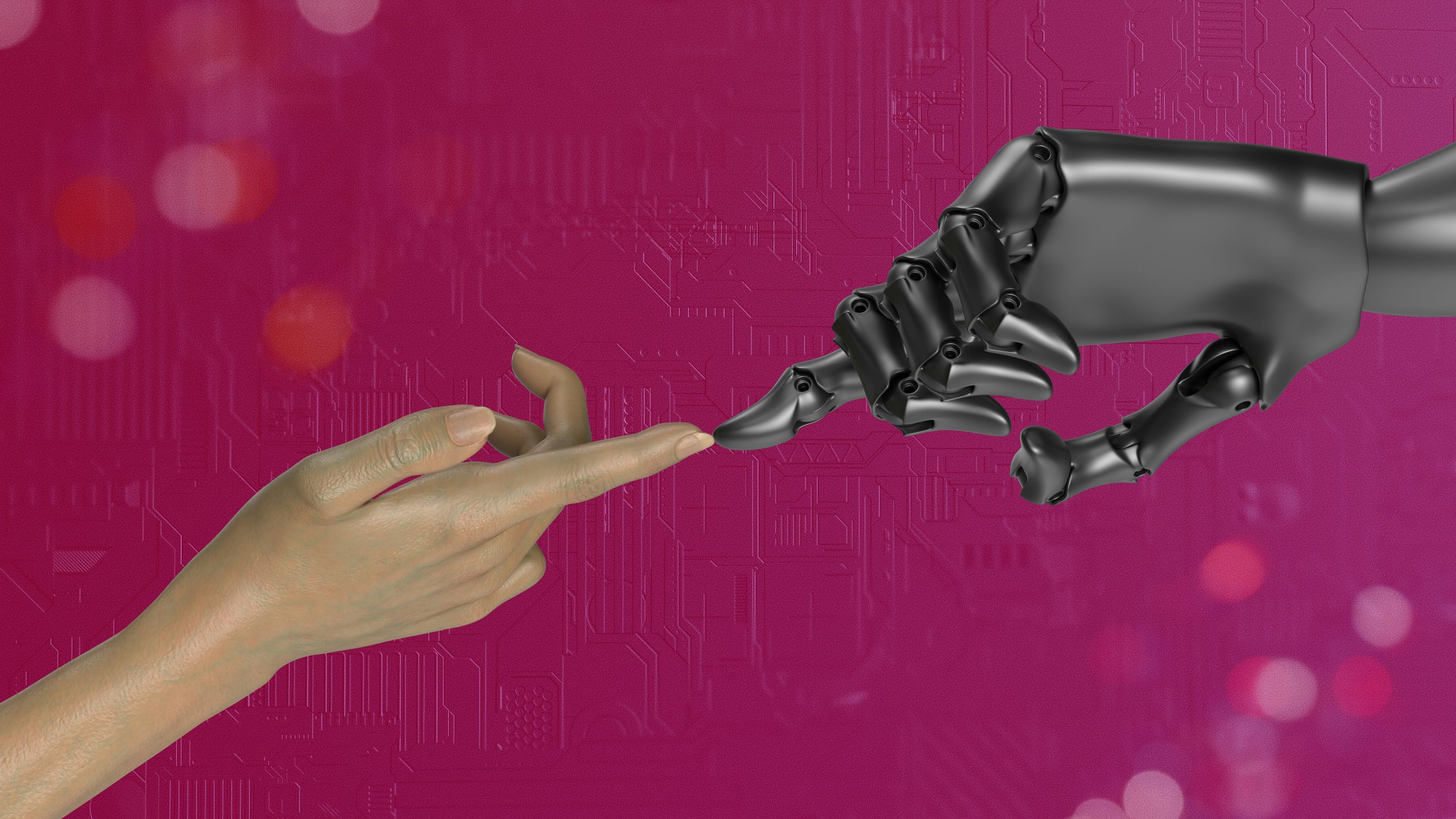

For decades, the relationship between computers and human language was defined by a profound mutual misunderstanding. Computers are inherently logical, deterministic systems that operate on binary code, strict mathematical rules, and absolute certainties. Human language, by contrast, is messy, fluid, riddled with ambiguity, and heavily dependent on unwritten cultural context.
Early attempts at Natural Language Processing in the mid-20th century treated language like a cryptographic code that could be cracked using direct word-for-word substitution. If you wanted a computer to translate a sentence from Russian to English, you simply provided it with a digital bilingual dictionary and a set of rigid grammatical rules. The results were notoriously disastrous. Phrases like “the spirit is willing, but the flesh is weak” would regularly be translated into mechanical nonsense like “the vodka is good, but the meat is rotten.”
The system failed because it treated words as isolated, static definitions. It lacked any concept of syntax, metaphor, or overarching narrative flow. For a machine to truly “speak” human, computer scientists had to abandon the idea of rigid, hand-coded grammar rules and figure out a way to teach software how to evaluate text dynamically through the lens of holistic context.
The Era of Sequential Limitations: The Struggle of Early Neural Networks
As computational power advanced in the 2000s and 2010s, researchers shifted from rule-based programming to machine learning. Instead of telling the computer how language worked, they gave the machine vast amounts of text and let it figure out the statistical patterns on its own.
The first major breakthrough in this neural era came with the adoption of Recurrent Neural Networks and Long Short-Term Memory networks. These systems were a massive step forward because they processed text sequentially—reading a sentence word by word from left to right, maintaining a small digital memory of what had come before.
However, these sequential models suffered from a major structural flaw known as the bottleneck of long-range dependencies. Because they processed language chronologically, they had a very short memory span. By the time an RNN reached the end of a long paragraph, the mathematical influence of the words at the very beginning would fade away.
If a text read, “The novelist, who had spent three decades traveling across the remote landscapes of South America and documenting the architectural ruins of ancient civilizations, sat down to write his book,” an early neural network would often forget that the subject of the sentence was a writer by the time it reached the final verb. This structural amnesia made it impossible for machines to maintain a coherent narrative tone, resulting in generated text that quickly devolved into repetitive, circular nonsense.
The Transformer Revolution: Processing Language All at Once
The turning point that allowed Large Language Models to transition from primitive text generators into articulate conversational partners occurred in 2017 with the introduction of the Transformer architecture. Published by Google researchers in a landmark paper titled “Attention Is All You Need,” this new approach completely discarded sequential processing.
Instead of reading text word by word, a Transformer processes an entire passage simultaneously. It views a document as a complete, multi-dimensional matrix of tokens. To solve the issue of word order, the architecture utilizes positional encoding, which tags each token with a mathematical coordinate representing its exact placement within the sequence.
This parallel processing capability allowed engineers to scale these models to unprecedented sizes. Because the computations could be broken up across thousands of powerful graphics processors simultaneously, machines could suddenly be trained on entire libraries of human knowledge, web scrapes, and historical archives. The barrier of computational time had been shattered, setting the stage for models containing hundreds of billions of structural parameters.
The Self-Attention Mechanism: Finding Meaning Through Relationships
The true magic engine inside the Transformer architecture is a concept known as the self-attention mechanism. This mathematical function allows the model to dynamically evaluate the relationship between every single word in a sentence, calculating how much “attention” each token should pay to every other token.
Consider the word “file” in the following two contexts:
-
“The lawyer organized the legal file on his desk.”
-
“The carpenter used a metal file to smooth the rough edges.”
A traditional computer program would look at the word “file” and struggle to identify its meaning without explicit human tagging. A Transformer-based LLM resolves this instantly through self-attention. When processing the first sentence, the attention mechanism calculates high mathematical weights between “file,” “lawyer,” and “legal.” The proximity of these vectors shifts the contextual meaning toward an administrative document organization. In the second sentence, the system notes the strong statistical relationship between “file,” “carpenter,” and “metal,” instantly pivoting the context toward a physical tool.
This process happens across millions of words simultaneously, allowing the model to capture the deep, underlying nuances of syntax, tone, and idiom. The machine doesn’t just read the words; it calculates how the presence of specific words alters the statistical meaning of everything around them.
From Mathematics to Fluency: The Illusion of True Conversation
By combining massive datasets, parallel Transformer processing, and the self-attention mechanism, modern LLMs achieved a level of linguistic fluency that was once considered science fiction. They learned to generate essays, write poetry, write code, and match specific cultural registers not because they developed a conscious soul, but because they mapped the structural architecture of human thought as reflected through our written text.
This transition from code to context is what makes modern AI feel incredibly human. The software has become so adept at calculating the mathematical probabilities of human expression that it can perfectly replicate our conversational patterns, our emotional expressions, and our narrative structures.
Ultimately, LLMs did not learn to speak human by understanding our world; they learned to speak human by capturing the statistical blueprint of our language. They operate as hyper-advanced mirrors, reflecting our collective knowledge, style, and nuance back at us through the clean execution of high-dimensional mathematics.