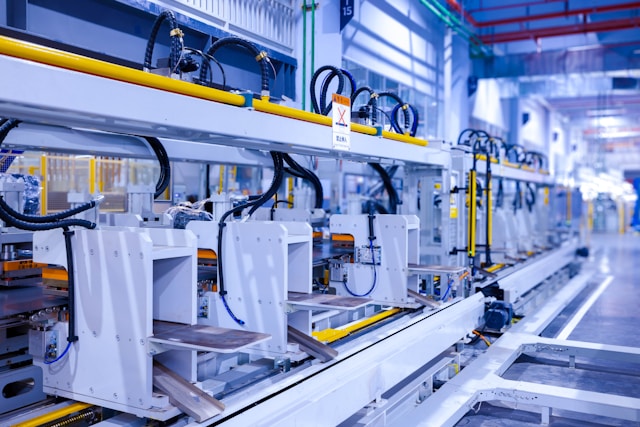

Robotics technology has become one of the most important innovations shaping modern industries. Warehouses and factories around the world are increasingly using robots to improve productivity, reduce operational costs, and handle growing market demands. What once seemed like futuristic technology is now becoming a standard part of industrial operations across manufacturing, logistics, retail, and distribution sectors.
As businesses face pressure to produce goods faster and deliver products more efficiently, robotics is helping companies modernize their operations. Automated machines can perform repetitive tasks with high precision, operate continuously without fatigue, and improve workplace safety by handling dangerous or physically demanding activities.
The rise of e-commerce, global supply chains, and smart manufacturing has accelerated investment in warehouse and factory robotics. From robotic arms on assembly lines to autonomous warehouse vehicles, these technologies are transforming how goods are manufactured, stored, and transported.
Robotics is not simply replacing manual labor. It is changing how businesses operate, how workers perform tasks, and how industries prepare for the future of automation and intelligent production systems.
The Growth of Robotics in Industrial Operations
Industrial robotics has existed for decades, especially in automotive manufacturing where robotic arms have long been used for welding, painting, and assembly tasks. However, recent technological advancements have made robotics more intelligent, affordable, and adaptable for a wider range of industries.
Modern robots now combine artificial intelligence, sensors, computer vision, machine learning, and automation software to perform increasingly complex tasks. Unlike older robotic systems that followed fixed instructions, today’s robots can analyze their surroundings, respond to changing conditions, and improve performance over time.
Warehouses and factories generate large amounts of operational data every day. Robotics systems connected to digital networks can process this information in real time, allowing businesses to optimize workflows and improve efficiency.
The growing demand for faster production and delivery services is driving companies to adopt robotics technologies more rapidly than ever before.
As robotics systems continue advancing, their role in industrial operations is expected to become even more significant across multiple sectors.
Warehouse Robotics and Automation
Warehouses are among the biggest beneficiaries of robotics technology. Traditional warehouses often relied heavily on manual labor for picking, packing, sorting, and moving inventory. These tasks could be physically demanding, time-consuming, and prone to human error.
Robotic systems are transforming warehouse operations by automating many of these repetitive processes. Autonomous mobile robots can move inventory throughout warehouses without human guidance, transporting products between storage areas and packing stations.
Automated storage and retrieval systems help warehouses organize products more efficiently while reducing the time needed to locate items. These systems can quickly retrieve products from shelves and deliver them to workers or packaging stations.
Robotics also improves order fulfillment speed. E-commerce companies processing thousands of daily orders rely on warehouse robots to handle large volumes of products accurately and efficiently.
Some warehouses use robotic sorting systems capable of identifying packages, scanning labels, and directing shipments automatically to the correct locations.
As customer expectations for faster deliveries continue increasing, warehouse robotics is becoming essential for maintaining efficient logistics operations.
Autonomous Mobile Robots in Warehouses
Autonomous mobile robots, often called AMRs, are becoming increasingly common in modern warehouses. These robots use sensors, cameras, artificial intelligence, and mapping systems to navigate warehouse environments independently.
Unlike traditional automated guided vehicles that follow fixed paths, AMRs can adjust routes dynamically based on obstacles, traffic conditions, and operational priorities.
Warehouse employees often work alongside these robots in collaborative environments. Robots transport products and materials while workers focus on tasks requiring human judgment or problem-solving skills.
AMRs improve operational flexibility because they can adapt to changing warehouse layouts and workflows more easily than older automation systems.
Many businesses are adopting mobile robotics to reduce labor-intensive transportation tasks and improve productivity during periods of high demand.
As navigation technology and artificial intelligence continue improving, autonomous robots are expected to handle even more warehouse operations in the future.
Robotic Arms in Manufacturing
Robotic arms remain one of the most widely used forms of industrial robotics in factories. These machines are designed to perform highly repetitive and precise tasks such as welding, assembly, painting, packaging, and material handling.
Manufacturing industries such as automotive production, electronics, aerospace, and consumer goods rely heavily on robotic arms to maintain consistent quality and high production speeds.
Robotic systems can operate continuously with minimal downtime, making them highly efficient for large-scale manufacturing operations.
Modern robotic arms are increasingly equipped with advanced sensors and artificial intelligence capabilities. These technologies allow robots to adjust movements, detect defects, and respond to changing production conditions in real time.
Collaborative robotic arms, known as cobots, are designed to work safely alongside human employees. Unlike traditional industrial robots that often operate behind safety barriers, cobots can assist workers directly on production lines.
This collaboration improves productivity while allowing employees to focus on more complex tasks that require creativity, problem-solving, or decision-making abilities.
Improving Productivity and Efficiency
One of the biggest reasons businesses invest in robotics is the significant improvement in productivity and efficiency.
Robots can perform repetitive tasks much faster than humans while maintaining consistent accuracy. They also operate continuously without breaks, fatigue, or reduced concentration.
In warehouses, robotics systems reduce the time required to process orders, organize inventory, and transport products. In factories, robotic automation increases production speed and reduces manufacturing errors.
AI-powered robotics systems can also optimize workflows by analyzing operational data and identifying inefficiencies. Some systems automatically adjust production schedules or warehouse routes to improve overall performance.
Faster operations help businesses meet growing customer demands while reducing delays and operational costs.
As competition increases across industries, productivity improvements driven by robotics are becoming essential for maintaining business competitiveness.
Enhancing Workplace Safety
Warehouses and factories often involve physically demanding tasks and potentially dangerous environments. Heavy lifting, repetitive motions, high temperatures, and industrial machinery can create safety risks for workers.
Robotics helps reduce workplace injuries by handling hazardous or repetitive tasks that may cause physical strain or accidents.
Robotic systems can safely transport heavy materials, operate in dangerous environments, and perform tasks involving chemicals, heat, or sharp equipment.
Some factories use AI-powered monitoring systems connected to robotics platforms to detect unsafe conditions and improve workplace safety.
Collaborative robots are designed with safety sensors that allow them to stop automatically if they detect nearby human movement. This technology helps create safer working environments where humans and robots can operate together effectively.
Improved safety not only protects employees but also reduces downtime, insurance costs, and operational disruptions caused by workplace accidents.
Artificial Intelligence and Smart Robotics
Artificial intelligence is making robotics systems smarter and more adaptable. Traditional industrial robots were limited to programmed instructions and repetitive movements. Modern AI-powered robots can analyze data, recognize patterns, and make decisions based on real-time information.
Computer vision technology allows robots to identify objects, inspect products, and navigate environments more accurately. AI systems also help robots improve performance through machine learning, where systems become more effective over time based on operational experience.
In warehouses, AI-powered robots can optimize picking routes, identify damaged products, and prioritize urgent orders automatically.
In manufacturing, intelligent robots can detect production defects, adjust machine settings, and improve quality control processes.
The combination of robotics and artificial intelligence is creating more flexible automation systems capable of handling increasingly complex industrial tasks.
As AI technology advances further, smart robotics will likely become even more capable and widely adopted.
The Impact on Employment
The growing use of robotics has raised concerns about job displacement in warehouses and factories. Some repetitive manual tasks are becoming increasingly automated, reducing the need for certain types of labor.
However, robotics is also creating new employment opportunities in areas such as robotics maintenance, programming, system management, data analysis, and automation engineering.
Many businesses now require workers with technical skills capable of operating and maintaining advanced robotic systems.
Rather than eliminating all jobs, robotics is often changing the nature of work within industrial environments. Employees increasingly focus on supervision, quality control, problem-solving, and technology management instead of repetitive manual labor.
Training and workforce development are becoming increasingly important as industries continue adopting automation technologies.
Companies that invest in employee education and technical training are often better prepared to adapt to the changing industrial landscape.
Robotics in E-Commerce and Logistics
The rapid growth of e-commerce has significantly increased demand for warehouse automation and robotics.
Online retailers process massive numbers of orders daily, requiring highly efficient fulfillment systems to meet customer expectations for fast delivery.
Robotic systems help e-commerce warehouses handle large product volumes while maintaining speed and accuracy.
Automated picking robots, conveyor systems, and sorting machines reduce order processing times and improve inventory management.
Delivery logistics is also evolving through robotics and automation technologies. Some companies are testing autonomous delivery vehicles and robotic delivery systems for last-mile transportation.
As online shopping continues expanding worldwide, robotics will likely remain a critical part of modern logistics and fulfillment operations.
Challenges of Robotics Implementation
Despite its many advantages, implementing robotics systems can be expensive and complex.
Advanced robots, AI software, and automation infrastructure often require significant financial investment, making adoption more difficult for smaller businesses.
Integrating robotics into existing operations may also require redesigning workflows, upgrading facilities, and training employees.
Maintenance and technical support are important considerations because robotic systems depend on specialized components and software.
Cybersecurity is another growing concern as connected robotics systems become increasingly integrated into digital industrial networks.
Businesses must also address employee concerns about automation and ensure workers are properly trained to work alongside robotic systems.
Despite these challenges, many companies view robotics as a long-term investment that improves efficiency, productivity, and competitiveness.
The Future of Robotics in Warehousing and Manufacturing
The future of industrial robotics is expected to become even more advanced as artificial intelligence, machine learning, and sensor technologies continue evolving.
Factories and warehouses may become increasingly automated through fully connected smart systems where robots, machines, and software communicate in real time.
Humanoid robots capable of performing more flexible tasks may eventually become more common in industrial environments.
Advances in AI and computer vision will likely improve robotic decision-making, adaptability, and precision.
Collaborative robotics is expected to expand further as businesses seek to combine human creativity and problem-solving skills with robotic efficiency and automation.
The continued growth of e-commerce, smart manufacturing, and global logistics will drive ongoing demand for robotics technologies across industries.
Robotics is no longer limited to large industrial corporations. It is becoming an essential part of modern warehousing and factory operations, helping businesses improve efficiency, increase safety, and prepare for the future of industrial innovation.